Whenever they must manage distributed teams, technology leaders face the dual challenge. The first is driving outcomes. The second is nurturing a coherent, connected culture. This playbook offers a step-by-step guide to building resilient remote engineering teams equipped to thrive across time zones and communication barriers.
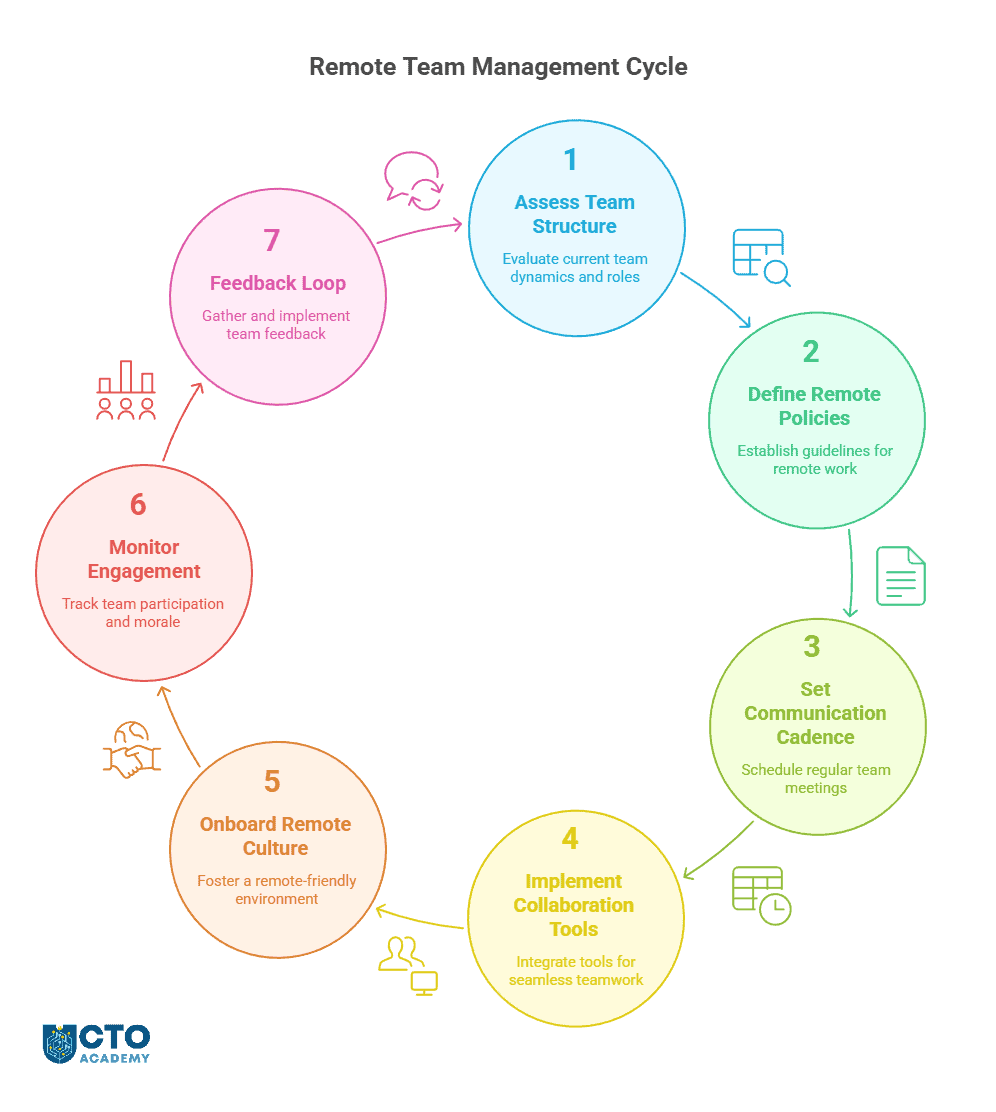
1. Assess Current Team Structure
Start with a situational audit:
- Map out current roles, overlap in working hours, and collaboration effectiveness.
- Identify gaps in visibility, autonomy, and performance tracking that might hinder remote efficiency.
2. Define Remote Work Policies
Establish policies that align with your business objectives and team diversity. Include:
- Expectations for availability
- Documentation standards
- Meeting etiquette
- Boundaries between work and rest.
3. Set Up Communication Cadence
Regular touchpoints are essential. This is what you should do:
- Use daily stand-ups, weekly retrospectives, and monthly strategy calls to synchronize efforts.
- Tailor formats to avoid fatigue and ensure inclusion across time zones.
4. Implement Collaboration Tools
Select and integrate a tech stack for seamless collaboration. Essentials include:
- Version control (Git)
- Project tracking (Jira)
- Documentation (Confluence)
- Messaging (Slack).
TIP: Automation can bridge tool silos.
5. Onboard Remote-Focused Culture
Onboarding should instill values, not just workflows. Therefore, introduce peer mentoring, asynchronous onboarding journeys, and culture-building rituals like virtual coffee hours to embed a shared ethos.
6. Monitor Engagement and Performance
- Track engineering output alongside engagement metrics.
- Use dashboards for velocity, PR cycle time, and DORA metrics.
- Supplement with pulse surveys and regular 1:1s to uncover sentiment trends.
7. Create a Continuous Feedback Loop
- Enable retrospectives every 4–6 weeks.
- Capture feedback anonymously and publicly.
- Adapt rituals and tooling based on evolving needs to foster continuous improvement.
With intentional leadership and robust systems, remote engineering teams can exceed the impact of colocated peers. Remember, resilience emerges not from tools but from trust, clarity, and shared purpose.